| Summary | What You’ll Learn |
| Who this article is for: Attorneys, debt collectors, real estate professionals, landlords, and individuals who need to locate someone who’s moved, gone quiet, or is otherwise hard to find. |
| Key takeaways: |
|
|
|
|
|
If you’ve ever tried to track down someone who’s moved without a forwarding address, changed their phone number, or is deliberately avoiding contact, you already understand the problem skip tracing solves. Whether you’re trying to serve legal papers, collect a debt, or locate an heir or missing owner in a real estate transaction, an outdated address is often the only thing standing between you and resolution.
Here’s what skip tracing actually is, how it works, whether it’s legal, and when it’s time to bring in a professional skip tracer.
What Is Skip Tracing?
Skip tracing is the process of locating a person who has “skipped” or moved on, often intentionally, without leaving a way to reach them. The term originated in the bail bonds and debt collection industries, but today it’s used any time someone needs to find a current address, phone number, and sometimes, a place of employment for a person who’s proven hard to locate.
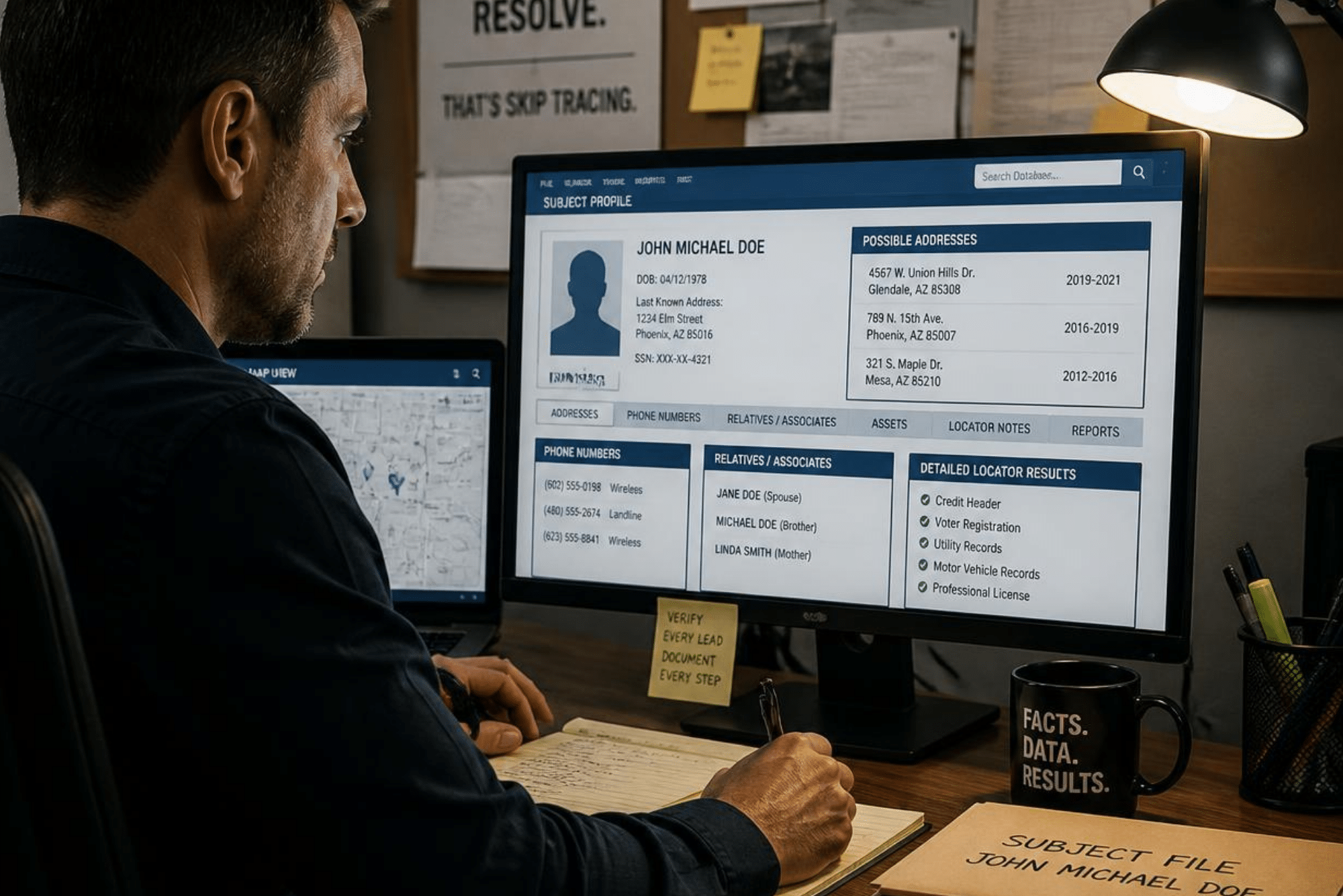
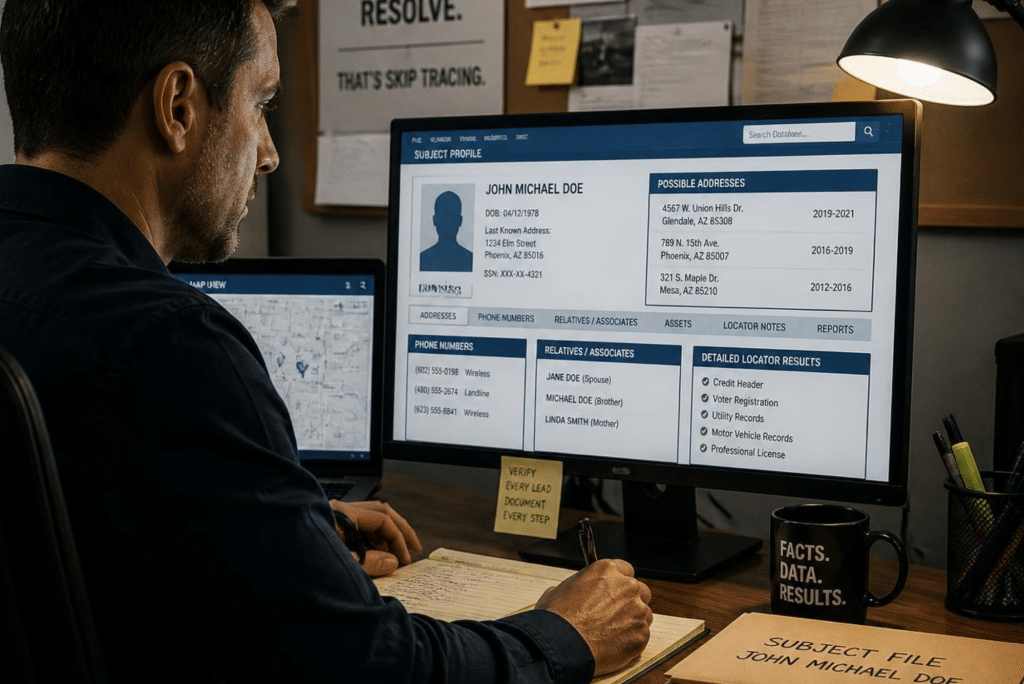
A skip tracer combines public records, licensed databases, and investigative know-how to build an accurate, current profile of where someone lives, works, or can otherwise be reached. It’s not guesswork, it’s a methodical process of cross-referencing data until the picture becomes clear.
People need skip tracing for all kinds of reasons: a defendant who won’t accept service, a debtor who stopped answering the phone, a beneficiary who can’t be found for an estate settlement, or a property owner who’s disappeared before a real estate closing. In every case, the goal is the same… find accurate, current, actionable information on where someone actually is.
How Does Skip Tracing Work?
Skip tracing works by pulling together information from multiple sources and verifying it until a reliable current location emerges. A skip tracer typically starts with whatever information is already available: a name, an old address, a phone number, a date of birth, and builds outward from there.
A typical skip trace draws on:
- Public records: property records, court filings, voter registration, and other government databases
- Licensed skip tracing databases: proprietary tools that aggregate credit header data, utility connections, and address history
- Social media and online presence: publicly available information that can confirm current employment, location, or associations
- Employment and licensing records: professional licenses, business filings, and known employers
- Relatives and known associates: people connected to the subject who may have current contact information
The real skill isn’t just pulling data, it’s knowing which sources are reliable, how to verify conflicting information, and how to close the gap between an outdated address and where someone actually is today. An experienced skip tracer knows how to separate a stale lead from a solid one, which is what separates a fast, accurate result from weeks of dead ends.
Is Skip Tracing Legal?
Yes, skip tracing is legal when it’s done using public records and permissible data sources. Skip tracers routinely work with property records, court documents, and licensed databases that are available for legitimate business purposes, including litigation, debt collection, and locating parties to a transaction.
Where skip tracing becomes illegal is in how the information is obtained or used. A few examples of what crosses the line:
- Pretexting: lying about who you are to trick a person, employer, or institution into handing over private information
- Unauthorized access: hacking into accounts or databases without authorization
- Violating the Fair Credit Reporting Act (FCRA): using credit report data for a purpose it wasn’t authorized for
- Harassment: using located information to threaten, intimidate, or repeatedly contact someone in violation of debt collection laws like the FDCPA
A licensed, reputable skip tracer knows exactly where those lines are and stays well inside them. That’s a big part of why it’s worth hiring a professional skip tracing service instead of trying to piece it together yourself with free online tools; the wrong search method can create legal exposure, while a professional skip tracer produces results you can actually use in court or in a collection file.
When You Need a Skip Tracer
Skip tracing shows up across several industries, but three come up more than any other.
Process Serving
You can’t serve someone you can’t find. When a defendant has moved, is dodging service, or simply left no forwarding information, skip tracing is often the only way to get a case moving again. A process server who also does skip tracing can locate the person and complete service in the same engagement, rather than stalling a case for weeks while an address is tracked down separately.
Debt Collection
Debtors who stop paying often stop being reachable, too. Disconnected phones, closed accounts, and abandoned addresses are common. Skip tracing gives collection attorneys and agencies a current, verified location so they can pursue judgment enforcement, garnishment, or continued collection efforts, all within FDCPA guidelines.
Real Estate
Real estate transactions can stall when an owner, heir, or lienholder can’t be located; think probate sales, tax deed transactions, or a title issue that surfaces an owner no one can reach. Skip tracing helps title companies, attorneys, and real estate professionals locate the right party so a closing or legal filing can move forward.
How All Pro Legal Services Uses Skip Tracing
At All Pro Legal Services, skip tracing isn’t an outside add-on, it’s a skill built directly into our team. Our staff includes individuals with direct experience in skip tracing, gained through years of locating hard-to-find defendants and working cases where a last known address simply wasn’t good enough.
That experience means when a process needs to be served and the named party isn’t where they’re supposed to be, we don’t have to hand the case back to you unresolved. We offer an optional investigative approach to locate the person and keep the case moving toward proper service. We also offer skip tracing as a standalone service for attorneys, collection agencies, and real estate professionals who need a current, reliable address before they take their next step.
Frequently Asked Questions
How long does skip tracing take? It depends on how much accurate starting information is available and how deliberately the person is avoiding contact. Some cases resolve in a day or two; others, particularly where someone is actively evading, can take longer.
What information do I need to provide to start a skip trace? The more you can provide, the faster the results. A full legal name, date of birth, last known address, and any known phone numbers or relatives all help narrow the search.
Is skip tracing the same as being a private investigator? Not exactly. Skip tracing is a specific investigative skill focused on locating a person’s current address or contact information. Some skip tracers are licensed private investigators, and in many cases that licensing allows for a broader range of investigative work.
Can skip tracing find someone who’s actively hiding? In most cases, yes. Even people who are deliberately avoiding contact leave a data trail: employment records, vehicle registrations, utility connections, that an experienced skip tracer can follow.
Is skip tracing legal for debt collection? Yes, as long as the methods used to locate the debtor and the way that information is used comply with the FDCPA and FCRA. A professional skip tracer understands those boundaries.
Need to Locate Someone Who’s Hard to Find?
Whether you’re dealing with a defendant who’s dodging service, a debtor who’s gone silent, or a party to a real estate deal who can’t be reached, an outdated address doesn’t have to stall your case. All Pro Legal Services combines skip tracing with over 30 years of process serving experience across Salt Lake, Utah, Davis, Weber, and Summit counties, with statewide service available on a case-by-case basis.
Visit our web page to learn more, or explore our full range of process serving and investigative services.
Contact us today or call 801-561-4278 to get started on locating the person you need to find.